
Parth Bhargava
Physics Undergraduate | National University of Singapore
A quiet research notebook on complex systems, nonlinear dynamics, and the habits of experimental and computational work.
About
I'm a second-year physics student building toward research in complex systems and nonlinear dynamics. This site is a public notebook of experiments, simulations, and ideas in progress.
I care about how simple rules generate structure across scales: nonlinear dynamics, emergence, and the geometry behind physical systems. I learn by building models, running measurements, and writing down what fails as much as what works.
I'm looking for research environments that value careful thinking, honest uncertainty, and iterative work with mentorship.
Projects

Active Matter: Vicsek Model + Run-and-Tumble
Unified study of two canonical active-matter models. Vicsek model simulates N self-propelled particles with minimum-image periodic boundaries, sweeping noise η to measure the order parameter φ = |⟨eiθ⟩| and locate the disorder-to-order nonequilibrium phase transition. Run-and-tumble section tracks the ballistic-to-diffusive MSD crossover with Poisson tumbling rates and optional harmonic confinement — validating the effective diffusion coefficient analytically. Implemented in Julia with a Pluto interactive applet.

Coupled Oscillators: Kuramoto Synchronization + Chimera States
Combines standard Kuramoto synchronization (all-to-all, Erdős-Rényi, scale-free networks) with chimera state emergence in ring-coupled Kuramoto-Sakaguchi oscillators. New Part III maps the full (K, R) phase landscape by scanning coupling and interaction range — revealing the chimera-to-synchrony boundary and overlaying the analytic Kc = 2σ√(2/π) theory curve. Implemented in Julia with a Pluto interactive applet.

Causal Inference: Transfer Entropy + CCM + Causal Emergence
Three complementary approaches to causal structure from data in one notebook. Transfer entropy (histogram, KSG k-NN, symbolic estimators) quantifies information flow. Convergent cross-mapping uses Takens delay embedding to detect coupling direction in deterministic systems where Granger causality fails. Causal emergence computes ΔEI across all 256 ECA rules to show when macro descriptions are causally richer than micro. A unified comparison panel shows when the methods agree, when they diverge, and what each uniquely reveals. Implemented in Julia with a Pluto interactive applet.

Physics Discovery: SINDy + Conservation Laws + Symbolic Regression
Three modes of equation discovery from trajectory data alone. SINDy (STLSQ sparse regression) recovers governing ODEs for Van der Pol, Duffing, and driven pendulum. Kernel conservation-law discovery finds conserved quantities via RBF eigenproblem — without DifferentialEquations.jl, using a shared custom RK4. Symbolic genetic programming discovers Feynman physics formulas (kinetic energy, pendulum period, Ohm’s law). A cross-comparison Part IV applies all three to the same benchmark and shows they answer different epistemic questions: dynamics, invariants, and phenomenological laws respectively. Implemented in Julia with a Pluto interactive applet.
Show more projects

Spin Glass Analysis of Neural Network Training
Tracks the Hessian eigenvalue spectrum of a small MLP during training on a spiral classification task. Computes the inverse participation ratio (IPR) as a proxy for replica symmetry breaking. Maps the glass-to-order transition as training progresses — connecting the 2024 Physics Nobel to finite-size neural networks.

Physics-Constrained CD Spectral Inversion
Forward model maps protein secondary structure composition (helix/sheet/coil fractions) to CD spectra using reference basis spectra. A small physics-informed MLP inverts the problem — predicting composition from spectrum with a physics loss penalising spectral inconsistency and composition sum ≠ 1. Draws on hands-on CD experimental experience.

Percolation on Simplicial Complexes
Bond percolation on simplicial complexes of dimension k=1 (pairwise), k=2 (triangles), and k=3 (tetrahedra). Higher-order interactions produce sharper, near-discontinuous transitions vs the second-order transition of standard network percolation. Computes giant component fraction and susceptibility for finite-size scaling.

Minimal Reservoir Computing
Systematic phase diagram of Echo State Networks over (sparsity, spectral radius) parameter space for Lorenz-63 prediction. Maps the minimal configuration that sustains prediction fidelity across multiple Lyapunov time horizons. Identifies the boundary between coherent and failed prediction.

Differentiable Pendulum: Parameter Inference
Gradient descent through a differentiable double pendulum simulator to infer physical parameters (masses, lengths, damping) from noisy observed trajectories. Finite-difference gradients of trajectory loss with respect to parameters. Connects directly to the driven pendulum chaos project with a data-driven inverse dimension.

Gō Model: Protein Folding Free Energy
Off-lattice Gō model for a simplified Trp-cage protein. Replica-exchange Monte Carlo samples the folding free energy landscape F(Q) as a function of the fraction of native contacts. Identifies the folded basin, transition state, and folding temperature — bridging computational protein physics with spectroscopic observables from CD/fluorescence experiments.
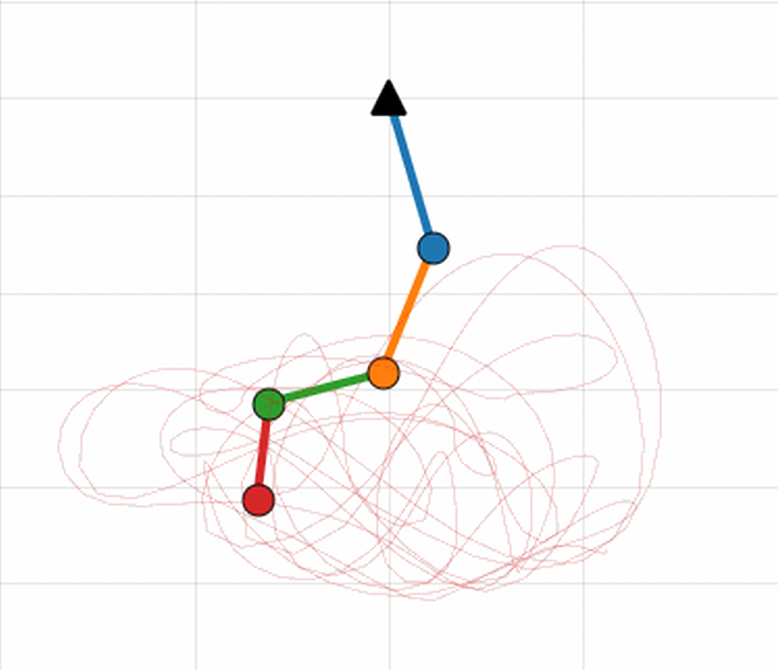
Driven Quadruple Pendulum
Simulated chaotic dynamics of a driven, damped quadruple pendulum; custom RK4 integrator with LU decomposition, Poincaré sections, bifurcation diagrams, and Lyapunov divergence. Co-authored with Soham Bhar.

Quantum Wavepacket — Schrödinger in Any Potential
Crank-Nicolson solver (unitary, O(N), norm-preserving) evolves a Gaussian minimum-uncertainty wavepacket through six built-in potentials — free propagation, rectangular barrier, finite square well, harmonic oscillator, double barrier, and potential step — plus a custom Julia expression field. Interactive sliders control potential amplitude (as a multiple of kinetic energy), barrier/well width (dynamically resizing the rectangular region and controlling parabola concavity), wavenumber k⊂0⊂, and animation speed. The 3D Argand diagram renders ψ as a complex helix with pitch = de Broglie wavelength; a live 2D panel below tracks |ψ|² alongside the potential profile, with real-time norm, transmission/reflection coefficients, and center-of-mass readout.

Gray-Scott Reaction-Diffusion — Turing Patterns
Finite-difference solver for the Gray-Scott PDE system on a 200×200 grid (5-point Laplacian, explicit Euler). Sweeping feed rate F and kill rate k maps the full Pearson diagram of morphologies — spots, stripes, worms, solitons, labyrinthine patterns, and uniform steady states. The progressive animation reveals how the spatial pattern grows from random initial conditions. Implemented in Julia with a Pluto interactive applet.
Coursework
Experimental Work
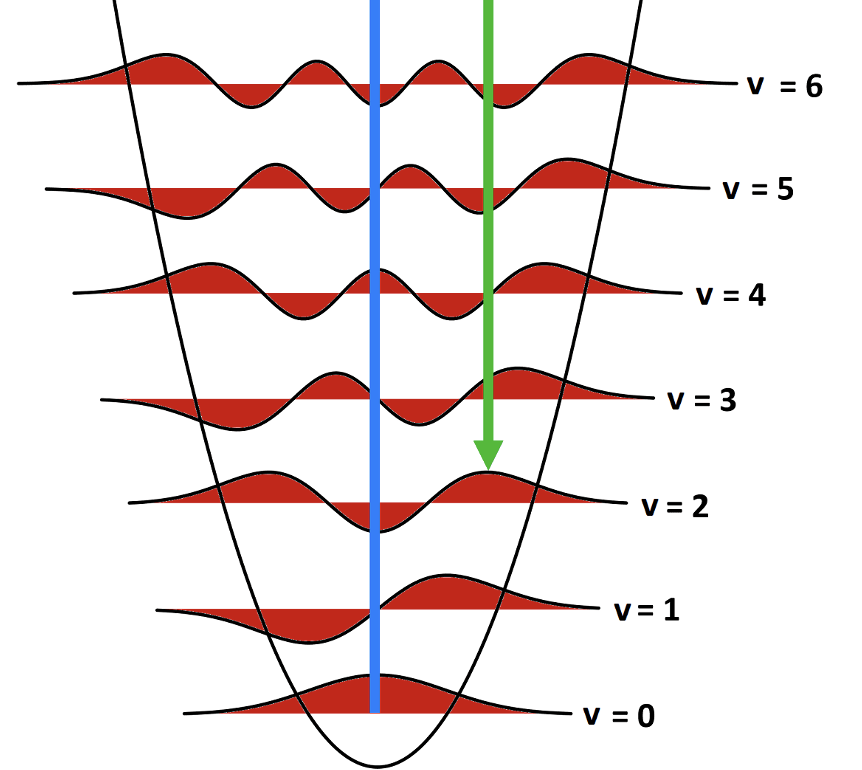
Raman Spectroscopy
Characterised carbon allotropes via D/G band ratios, estimated graphene layer count, and identified an unknown semiconductor wafer from its 521 cm⁻¹ mode.
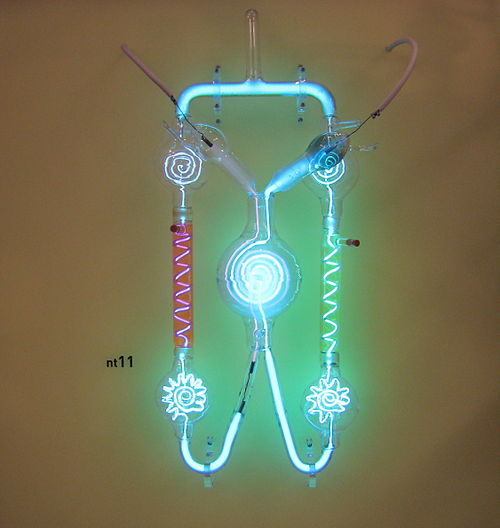
Paschen Curve & Gas Discharge
Mapped breakdown voltage vs. electrode gap at three pressures; extracted the second Townsend coefficient and identified the avalanche-to-streamer transition.
Show more experiments
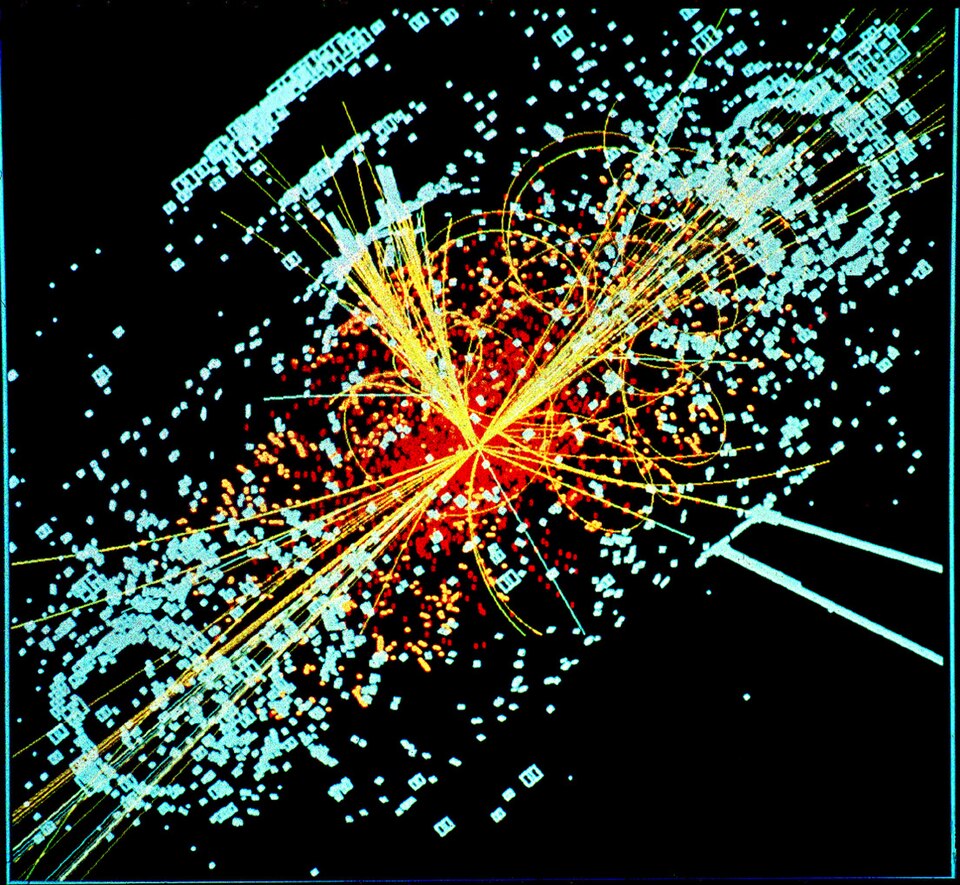
TRIM Ion Transport Simulation
Monte Carlo simulations of ion range, damage, and sputtering across nuclear microscopy, semiconductor implantation, and proton therapy applications.
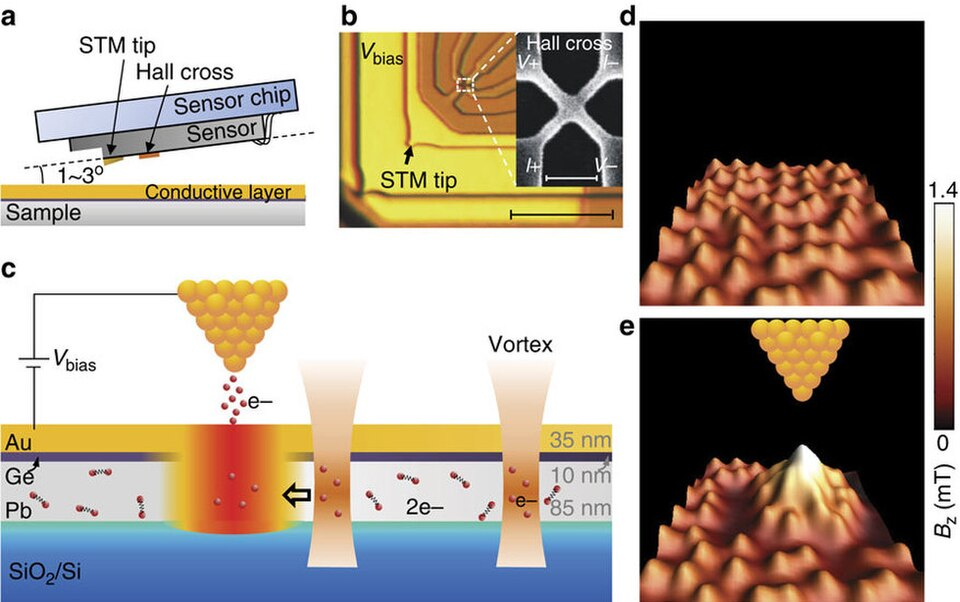
Hall Effect in Semiconductors
Measured Hall voltage and magnetoresistance across temperature to extract carrier type, mobility, and the intrinsic transition; includes uncertainty analysis.
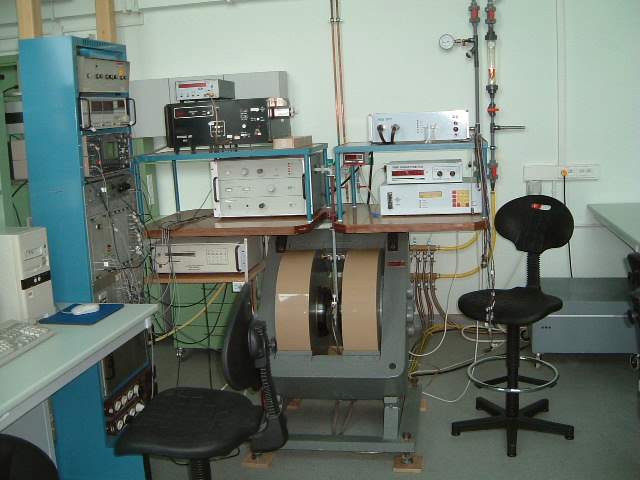
Electron Spin Resonance (ESR)
Extracted g-factor from frequency–field measurements; analyzed Zeeman splitting and systematics.
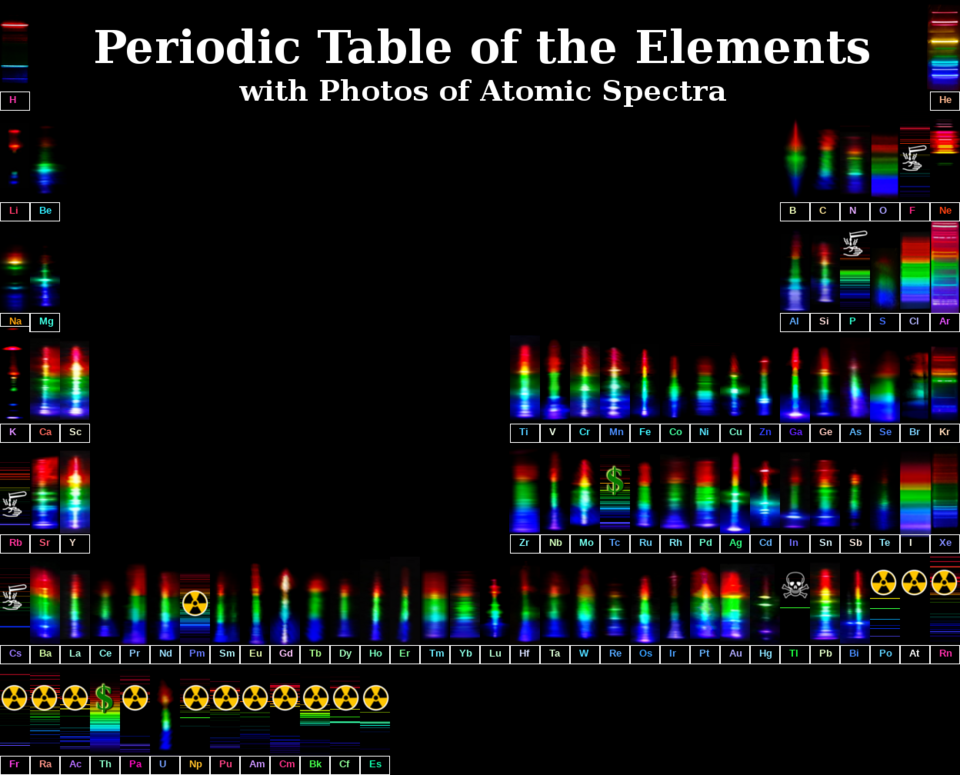
X-Ray Fluorescence Analysis
Qualitative elemental identification of unknowns and quantitative brass composition via Gaussian deconvolution of overlapping K-lines.
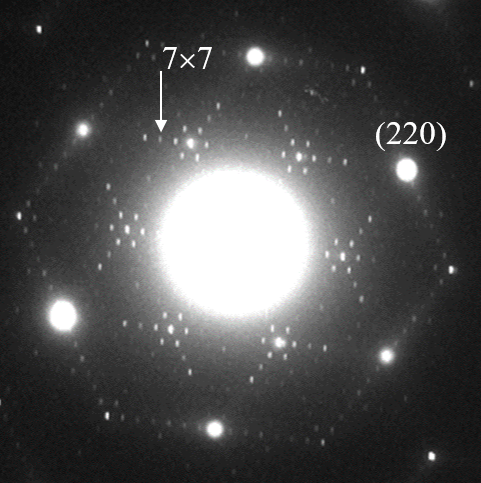
X-Ray Diffraction Analysis
Used Bragg peaks to determine lattice constants and identify an unknown crystal; report documents calibration limits.
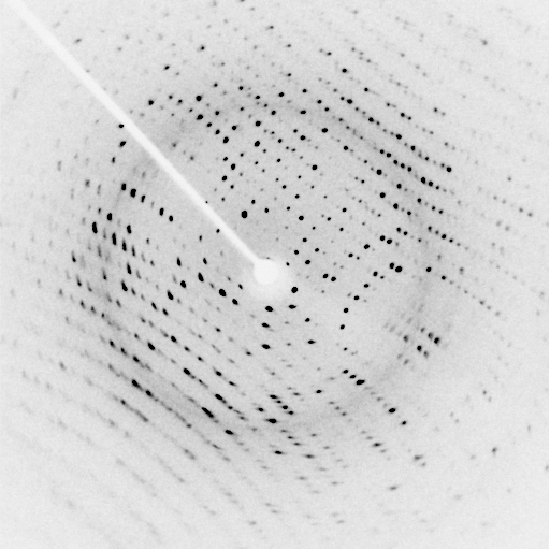
Laue Diffraction & X-Ray Crystallography
Indexed Laue back-reflection patterns and determined lattice parameters; combined with powder XRD for crystal identification.
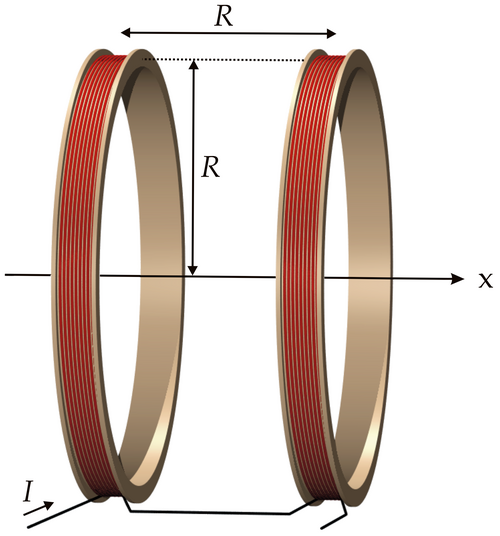
Magnetic Moment in Helmholtz Field
Calibrated Helmholtz field constant and tested scaling laws; corrected a model assumption during analysis.
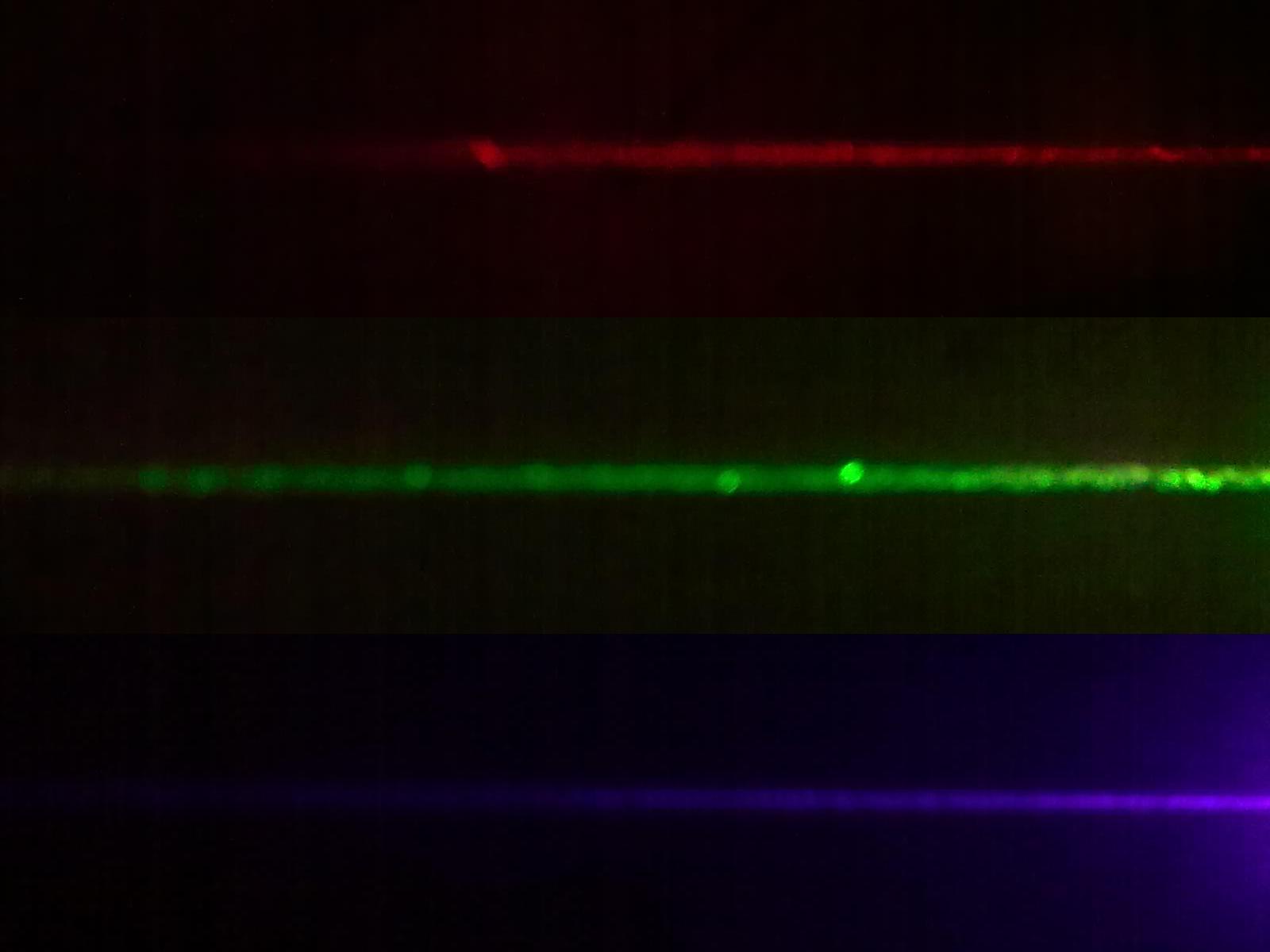
Propagation of Laser Light (PLL)
Measured Gaussian beam parameters and beam quality; report focuses on fitting and measurement limits.
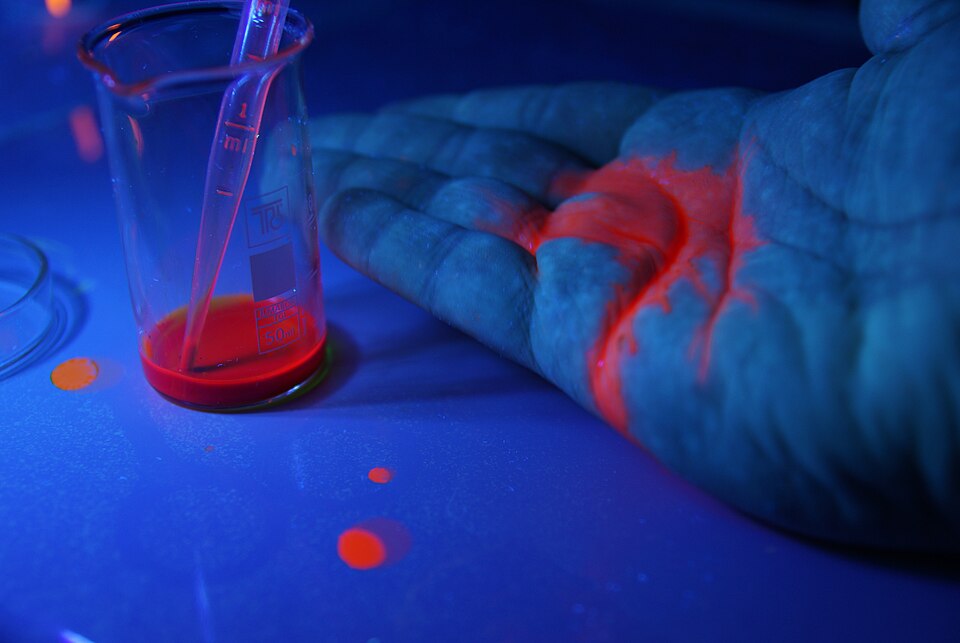
Fluorescence Spectroscopy: Protein Unfolding
Tracked acid denaturation of BSA and lysozyme via intrinsic Trp/Tyr fluorescence; observed emission shifts and intensity changes tied to tertiary structure loss.
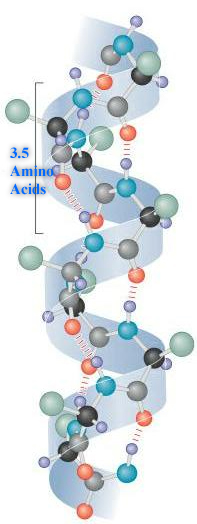
Circular Dichroism: Protein Secondary Structure
Monitored α-helical content of BSA and lysozyme under acid denaturation using far-UV CD; lysozyme's disulfide bonds preserved its secondary structure.
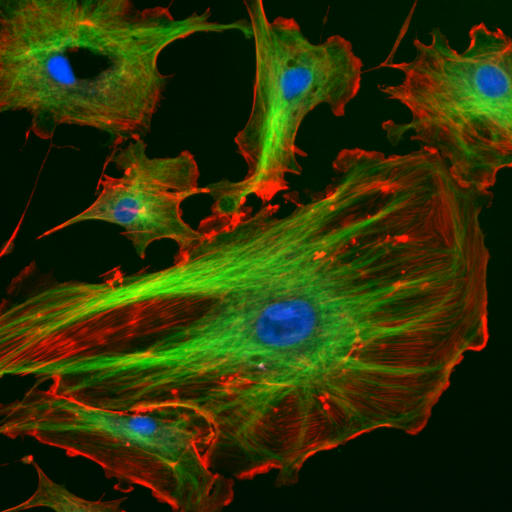
Fluorescence Microscopy: Cellular Structure
Imaged Hoechst-stained onion epidermal and cheek epithelial cells; compared brightfield and fluorescence contrast for nuclear localisation.
Notes and Assignments
Assignments
Classical Mechanics II (PC3261)
- CMA 1
- CMA 2
- CMA 3
- CMA 4
- CMA 5
- CMA 6
- CMW 2
- CMW 4
- CMW 5
- CMW 6
- CMW 7
- CMW 8
- CMW 9
- CMW 10
- CMW 11
- CMW 12
- CMW 13
- CMW 14
- CMW 15
- CMW 16
- CMW 17
- CMW 18
- CMW 19
- CMW 20
- CMW 21
- CMW 22
- CMW 23
- CMW 24
Thermodynamics & Statistical Mechanics (PC2135)
- Assignment 1
- Assignment 2
- Assignment 3
- Assignment 4
- Assignment 5
- Assignment 6
- Assignment 7
- Assignment 8
- Assignment 9
- Assignment 10
- Assignment 11
- Assignment 12